How to Choose the Right Asphalt Roofing Contractor in St. Louis
Choosing the right asphalt roofing contractor in St. Louis comes down to a few things you can actually verify before you sign anything: proper local licensing and insurance, a manufacturer certification from a name like Owens Corning, and a real local track record you can check for yourself. A new roof is one of the largest investments most homeowners make, and the contractor you pick matters just as much as the shingles they install.
The tricky part in our market is that St. Louis draws a wave of out-of-town crews every time a hail storm rolls through. Some are legitimate. Many are not. This guide walks through exactly what to look for, the questions to ask, and the warning signs that should send you looking elsewhere.
Key Takeaways
- Missouri has no statewide roofing license, so you have to verify a contractor’s municipal registration, general liability insurance, and workers’ compensation yourself.
- Manufacturer certifications like Owens Corning Preferred Contractor unlock stronger, longer warranties that a non-certified roofer simply cannot offer.
- A local address, verifiable reviews, and a written warranty separate an established St. Louis roofer from a storm chaser passing through town.
- Never pay in full up front or hand over an insurance check before the work is inspected and complete.
Why Is Hiring a Roofer in St. Louis Different?
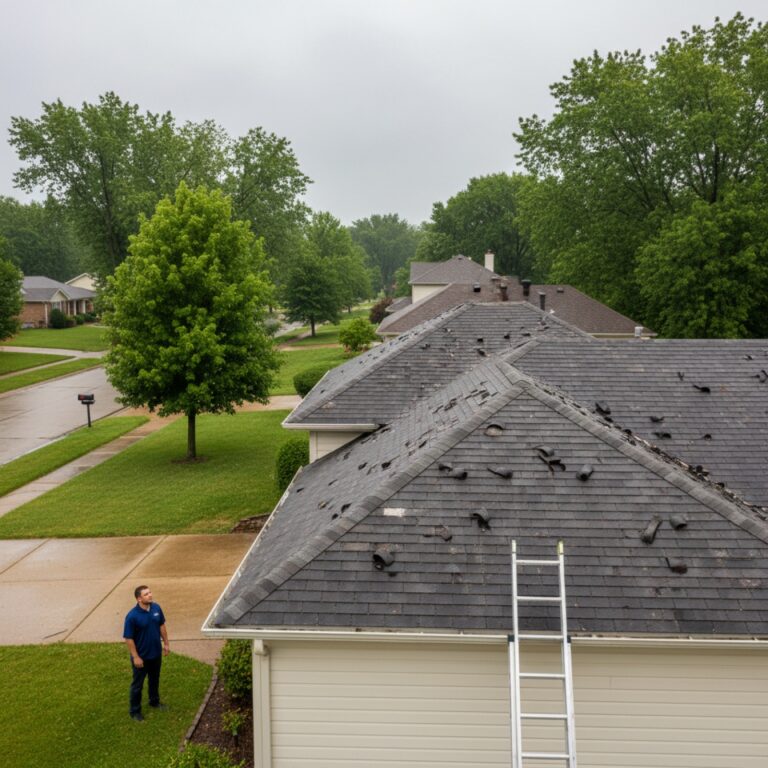
St. Louis sits in a stretch of the country that takes a real beating from spring hail and straight-line summer winds, and that weather shapes the local roofing market. Every major storm brings a surge of transient crews, often called storm chasers, who follow hail from state to state, knock on doors, and pressure homeowners into fast decisions.
The National Weather Service tracks the St. Louis region as part of an active severe-weather corridor, with hail and damaging winds most common from March through June. After a big event, honest local roofers book out fast, which is exactly the gap out-of-town crews try to fill.
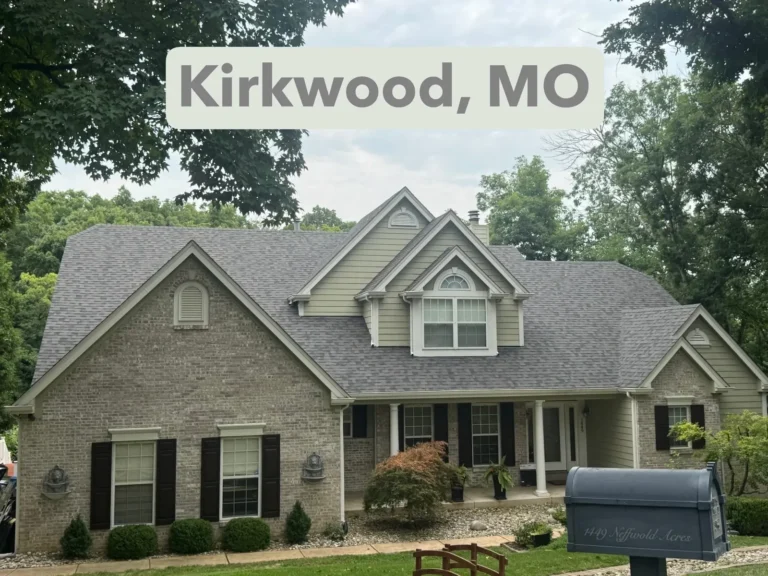
That is why “who is this company, really” matters here more than in calmer parts of the country. A contractor with a Kirkwood or St. Louis County address, a paper trail of local jobs, and manufacturer credentials is a very different bet than a truck with an out-of-state plate and a clipboard. If you think a recent storm hurt your roof, start with a documented look at the damage rather than a stranger’s estimate. Our overview of storm damage and insurance claims in St. Louis explains how a proper inspection works.
What Licensing and Insurance Should a St. Louis Roofer Have?
This surprises a lot of homeowners: Missouri does not issue a statewide roofing or general contractor license. Instead, licensing happens at the municipal level, so a legitimate roofer registers and pulls permits in the cities where they work, whether that is Kirkwood, Chesterfield, Webster Groves, or St. Louis County.
Because there is no state license to lean on, the burden of checking is on you. Before you hire anyone, confirm all of the following:
- A local business license or municipal registration for the city where your home sits.
- General liability insurance, which protects your property if something goes wrong during the job.
- Workers’ compensation coverage, so you are not exposed if a crew member is injured on your roof.
- Willingness to pull the proper permit in your municipality rather than working around it.
- A physical local address you can look up, not just a cell number and a magnetic door sign.
Ask for a certificate of insurance in writing and confirm it is current. A reputable contractor hands these over without hesitation. Anyone who dodges the question or claims they do not need coverage is telling you something important.
Why Do Manufacturer Certifications Matter?
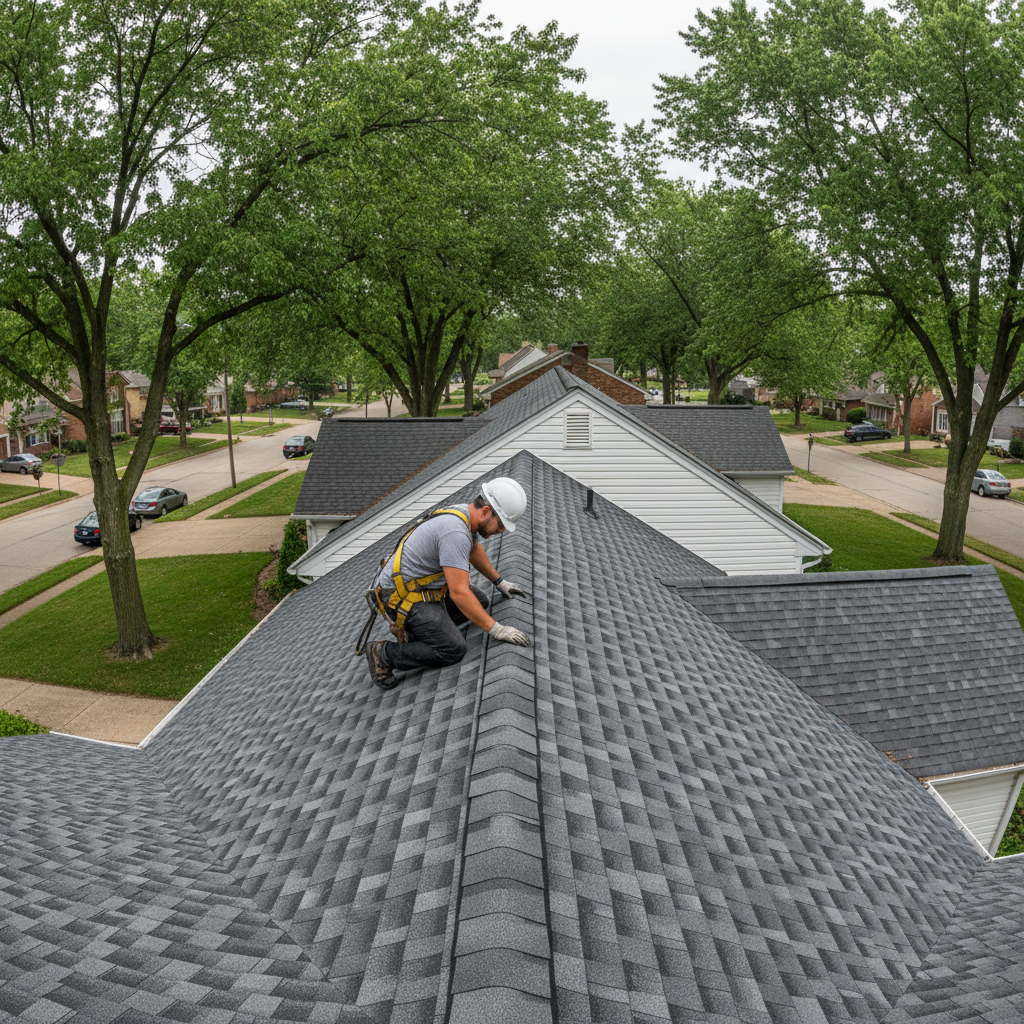
Manufacturer certifications are one of the clearest signals that a roofer is established and accountable, because the shingle maker only grants them to contractors who meet training, insurance, and reputation standards. As an Owens Corning Preferred Contractor, for example, a company can offer stronger system warranties than a non-certified installer can, which protects your investment long after the crew drives away.
This matters for a practical reason. Most asphalt shingle warranties are only as good as the installation behind them, and a manufacturer will stand behind its product far more readily when a certified contractor did the work to spec. A roofer who cannot name a single manufacturer credential is asking you to trust the workmanship on faith alone.
When you compare bids, ask what certifications each contractor holds and what warranty comes with the roof. A certified installer backing the job with both a workmanship warranty and a manufacturer material warranty gives you two layers of protection instead of one.
What Questions Should You Ask Before Hiring?
A short list of direct questions will tell you most of what you need to know. Before you sign a contract with any St. Louis roofing contractor, ask:
- How long have you been in business, and are you based here in the St. Louis metro?
- Can you provide proof of general liability insurance and workers’ compensation?
- Are you certified by the shingle manufacturer you plan to install?
- What does your workmanship warranty cover, and for how long?
- Will you handle the permit for my municipality?
- Can you share recent local references or addresses of jobs nearby?
- What is your payment schedule, and what deposit do you require?
The answers should be specific and confident. Vague responses, or pressure to skip the paperwork and start tomorrow, are a reason to slow down. A trustworthy roofer wants you to check, because the checking is exactly what sets them apart from the crews passing through.
What Are the Red Flags of a Storm Chaser?
Storm chasers can be hard to spot because the good ones look professional at first glance. The warning signs tend to show up in how they do business, not how their truck looks. Watch for these:
- A knock on your door within days of a storm, with a hard push to sign immediately.
- A demand for full payment up front, or a request that you sign over your insurance check.
- No local address, an out-of-state phone number, or a company you cannot find any history for online.
- A quote that comes in dramatically lower than everyone else, which often means corners will be cut.
- A refusal to put the warranty, the scope of work, or the insurance details in writing.
The single most protective rule is simple: never pay in full before the work is inspected and complete, and never hand over an insurance payment to a contractor you have not verified. A legitimate St. Louis roofer works on a reasonable deposit and final payment schedule and is still in town if a problem shows up next year.
How Should You Compare Roofing Estimates?
Comparing estimates is about more than the bottom-line number. The lowest bid is frequently the most expensive choice once you account for thin materials, skipped steps, or a warranty that evaporates when you try to use it. Read each estimate for what it actually includes.
A complete estimate should spell out the shingle brand and line, whether the old roof is being torn off down to the decking, what happens if rotten decking is found, the underlayment and ice-and-water barrier being used, ventilation work, cleanup, and the warranty terms. When two bids look far apart, the difference is almost always in those details, not in one company being generous.
Financing can also shape the decision, since a slightly higher bid from a certified local contractor may be the better long-term value. Many homeowners spread the cost with roofing financing options so the right roof does not have to wait. If you want to understand the full scope before you compare numbers, our roof replacement process in St. Louis lays out what a proper installation involves from tear-off to cleanup.
Frequently Asked Questions
Do roofing contractors need a license in Missouri?
Missouri does not have a statewide roofing or contractor license. Licensing is handled at the municipal level, so a legitimate contractor holds a business registration and pulls permits in the specific cities they work in, such as Kirkwood, Chesterfield, or elsewhere in St. Louis County. Always confirm local registration plus liability and workers’ compensation insurance yourself.
How do I check if a St. Louis roofer is legitimate?
Verify a physical local address, ask for a current certificate of insurance, confirm manufacturer certifications, and look up independent reviews and a Better Business Bureau profile. A real local company has a traceable history in the metro. If you cannot find any record of the business beyond a recent flyer or door knock, treat that as a warning sign.
What is an Owens Corning Preferred Contractor?
It is a roofer that Owens Corning has vetted and certified based on training, proper insurance, and reputation. The certification lets the contractor offer stronger system warranties than a non-certified installer, and it signals that the company is established and accountable. It is a selective credential, and not every roofer earns it, which is part of what makes it a useful signal of vetting and training when you compare contractors.
Should I hire the roofer with the lowest bid?
Not automatically. The lowest bid often reflects thinner materials, a skipped tear-off, or a weak warranty rather than real savings. Compare exactly what each estimate includes, including the shingle line, the decking plan, ventilation, and warranty terms. The best value is usually a certified local contractor whose bid is complete and clearly written, not simply the cheapest.
How soon after a hail storm should I get my roof inspected?
Sooner is better, ideally within a few weeks. Insurance claims often have filing deadlines tied to the date of the storm, and honest local crews book up quickly after a major event. An early, documented inspection gives you clear evidence of any damage and more time to work through a claim without pressure.
Get a Straightforward Opinion From a Local Team
If you are weighing a roof replacement or trying to sort a legitimate roofer from a storm chaser, the best next step is an honest, no-pressure inspection from a company that lives and works here. St. Louis Roofing & Siding is a family-run, Owens Corning Preferred Contractor based in Kirkwood, serving homeowners across Kirkwood, Chesterfield, and the wider St. Louis metro for close to two decades.
Call us at (314) 598-2347 or request your free estimate today.