How to Know When to Replace Your Roof
Your roof is the one part of your home that quietly does its job every single day, right up until the day it stops. For homeowners across the St. Louis metro, that day tends to arrive faster than it does in milder parts of the country. Between spring hail, straight-line summer winds, and the freeze and thaw cycles that grind through every Missouri winter, our roofs take a real beating. The hard question most homeowners eventually face is not whether the roof has aged, but whether it is time for a repair or time for a full replacement.
This guide walks through the signs that point toward replacement, how to weigh a repair against a new roof, and what the process actually looks like for a home in the St. Louis area.
Start With Your Roof’s Age
Age is the first thing to check, because it sets the context for everything else. Most homes around Kirkwood, Webster Groves, Chesterfield, and the rest of the metro are topped with asphalt shingles, and those have a predictable lifespan:
- Three-tab asphalt shingles: roughly 15 to 20 years
- Architectural (dimensional) asphalt shingles: roughly 25 to 30 years
- Standing-seam metal roofing: 40 to 70 years
- TPO and other flat commercial systems: 20 to 30 years
If your roof is approaching the end of its expected range and you are already noticing other warning signs, replacement is usually the smarter long-term move. Patching a roof that is near retirement often means paying for a repair one year and a full tear-off the next.
Storm and Hail Damage Is the St. Louis Wild Card
Age alone does not tell the whole story here. St. Louis sits in a part of the country that sees frequent hail and high wind, and a single strong spring storm can take years off a roof’s life in an afternoon. Our heaviest storm season runs from roughly March through June, and it brings hail, damaging straight-line winds, and the occasional tornado warning.
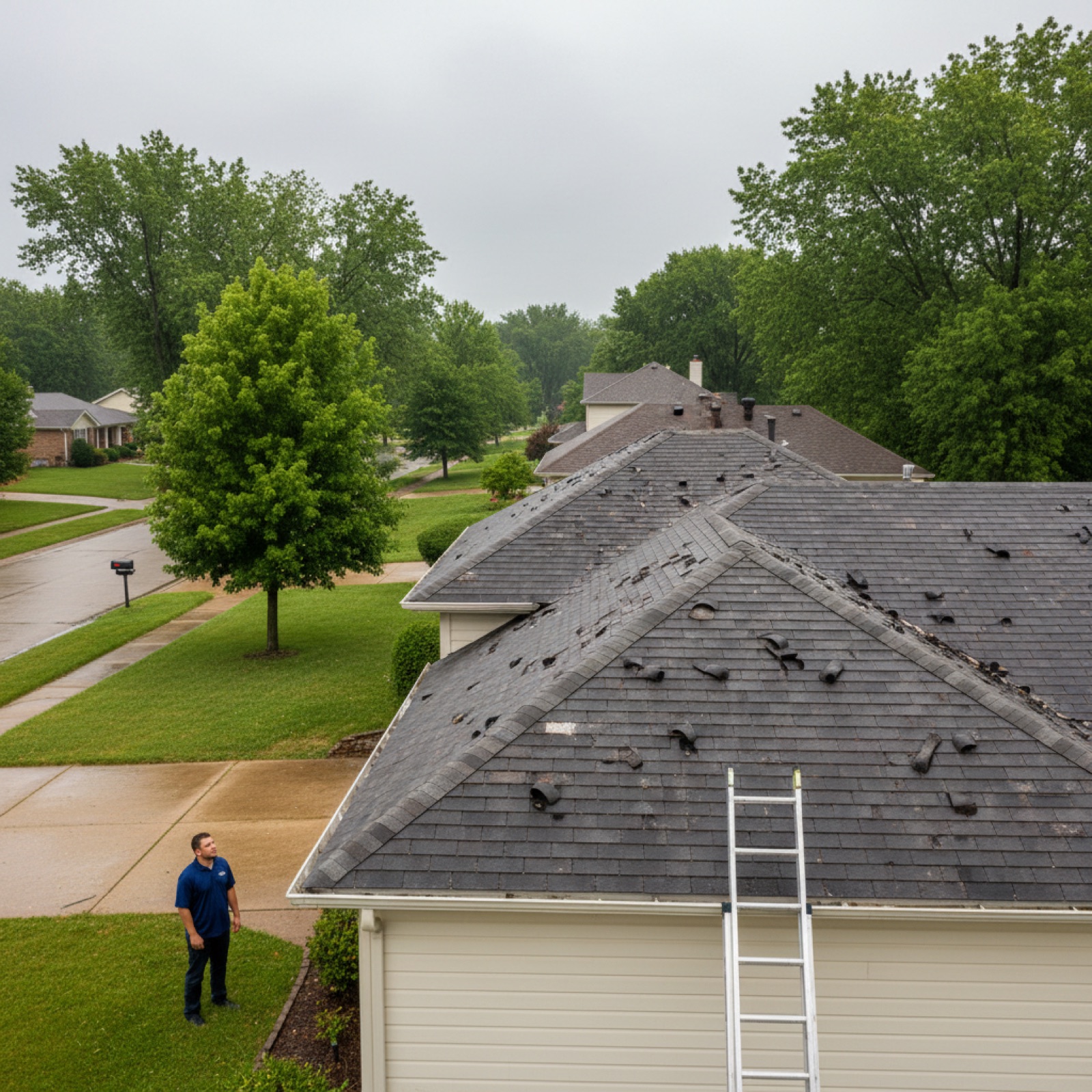
Hail rarely puts a hole straight through a roof. Instead it bruises the shingles, knocks off the protective granules, and leaves soft spots that fail slowly over the following seasons. Wind lifts and creases shingles so they no longer seal down the way they should. Damage like this is easy to miss from the ground, which is exactly why it is worth a professional look after any major storm. If you think your roof took a hit, our overview of storm damage and insurance claims in St. Louis explains how the inspection and claim process works.
Warning Signs You Can Spot From the Ground
You do not need to climb a ladder to catch many of the clearest signals. From your yard or driveway, look for:
- Shingles that are curling, cupping, or buckling instead of lying flat
- Missing shingles, or bare patches where the roof looks a different color
- Dark streaks and bald spots where the granules have washed away
- A roofline that sags or dips instead of running straight
- Piles of shingle granules collecting in your gutters or at the bottom of downspouts, which look like coarse black sand
- Bent, rusted, or pulled-away metal flashing around chimneys, vents, and valleys
Any one of these on its own may only call for a repair. Several of them together, especially on an older roof, usually point toward replacement.
Warning Signs Inside Your Home and Attic
Some of the most important clues are found indoors, not up on the roof. Grab a flashlight and check your attic and ceilings for:
- Brown or yellow water stains on ceilings or upstairs walls
- Daylight coming through the roof boards in the attic
- Damp, matted, or discolored insulation
- A musty smell that hints at trapped moisture or early mold
- A noticeable jump in heating or cooling bills, which can signal a roof and attic that are no longer sealing and venting properly
Active water intrusion is the sign that turns a project from optional into urgent. Once water is reaching the decking, every additional storm makes the repair larger and more expensive.
Repair or Replace: How St. Louis Homeowners Should Decide
Not every problem roof needs to come off. A younger roof with damage confined to one slope or one storm event is often a good candidate for repair. Replacement tends to make more sense when:
- The roof is within a few years of the end of its expected lifespan
- Damage covers a large share of the roof rather than one small section
- You are dealing with the same leak returning again and again
- There are already two or more layers of shingles up there, which local code will not let you simply add to
- You are planning to sell, since buyers and their inspectors scrutinize roof age closely
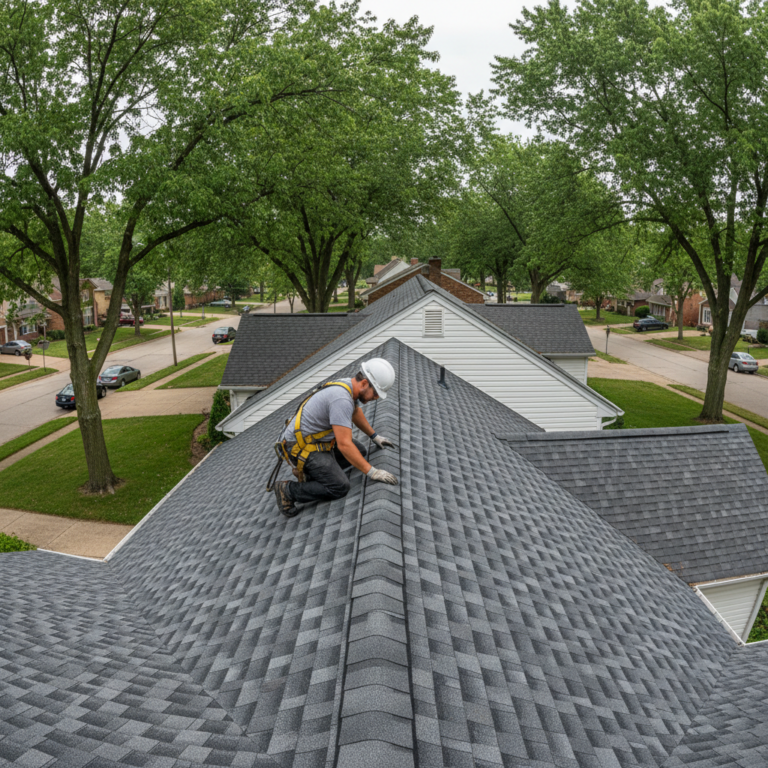
The most reliable way to settle the question is a professional inspection. A five-point roof inspection with drone documentation gives you clear photos of the actual condition, so the repair-versus-replace decision is based on evidence rather than a guess.
What a St. Louis Roof Replacement Usually Involves
If replacement is the answer, here is what the work typically looks like on a local home. The old roofing is torn off down to the decking, and the crew checks the wood underneath for rot or storm damage before anything new goes on. From there, the new system is built up in layers: underlayment, an ice-and-water barrier in the vulnerable areas (which matters in our freeze-thaw climate), the new shingles or panels, and proper ridge venting so the attic breathes.
Most St. Louis homeowners choose architectural asphalt shingles for the balance of cost and longevity, and we install them as an Owens Corning Preferred Contractor. Metal is a growing choice for its lifespan, and homeowners rebuilding after a storm sometimes step up to a FORTIFIED roof built to a stronger standard against wind and hail. A typical residential replacement wraps up in one to three days, weather permitting.
Why Timing Matters Through the St. Louis Seasons
If your roof is failing, the calendar works against you. Late spring, summer, and early fall offer the most dependable stretches of dry weather for a clean installation. Winter is the season you least want to be caught with an active leak, because freeze and thaw cycles pry at every gap and turn a small problem into a bigger one. After a big hail event, local roofing crews book out quickly, so scheduling an inspection early gives you a better place in line and more time to work through any insurance claim without pressure.
Frequently Asked Questions
How long does a roof last in the St. Louis area?
It depends on the material and how many storms it has weathered. Standard asphalt shingles often last 15 to 25 years here, though repeated hail and wind can shorten that. Metal roofs can last decades longer. Because our weather is harder on roofs than the national average, it is worth an inspection once a roof passes the 15-year mark even if it looks fine from the ground.
Will my homeowners insurance pay for a new roof after a hail storm?
Often, yes, when the damage is recent and clearly storm related. Coverage depends on your policy and the age of the roof, and a documented inspection makes a big difference in how the claim goes. We can inspect the roof, document any damage, and walk you through the claims process from start to finish.
Can I just add a new layer of shingles over my old roof?
Sometimes, but it is rarely the best choice, and local code limits you to a set number of layers. Adding a layer hides whatever is happening to the decking underneath and can trap heat and moisture. A full tear-off lets us inspect and repair the wood decking, which is where lasting roof problems usually begin.
How much does a roof replacement cost in St. Louis?
Cost depends on the size and pitch of the roof, the material you choose, and the condition of the decking once the old roof is removed. Rather than quote a number that may not fit your home, we provide a free, detailed estimate after inspecting the roof, and we offer financing options to help spread the investment out.
How do I know if my damage is bad enough to replace the whole roof?
The clearest way is a professional inspection. As a rule of thumb, damage limited to one small area on a newer roof usually calls for a repair, while widespread damage or an older roof usually points to replacement. Photos from a thorough inspection make that call obvious.
Not Sure Where Your Roof Stands? Let’s Take a Look
If any of the signs above sound familiar, the best next step is a straightforward, no-pressure inspection. St. Louis Roofing & Siding is a family-run company based in Kirkwood, and we have helped homeowners across the metro protect their homes for close to two decades. We will give you an honest read on whether your roof needs a repair, a replacement, or simply some monitoring, and clear photos to back it up.
Call us at (314) 598-2347 or request your free estimate today. You can also learn more about our roof replacement services in St. Louis.